For professionals and parentsUpdated October 2026
Answers are getting cheap. What they’re made of isn’t.
The Expensive Things is nonfiction about what happens when AI makes answers cheap. Built from published research and reporting, it follows five patterns through chess, the cockpit, radiology, hiring and school, and ends with five questions to ask about your own work.
- Pages
- 221
- Chapters
- 12
- Format
- PDF + EPUB
Why this book
Three questions cheap answers raise, at work, at home and in hiring.
- 01
“Will AI make what I know worthless?”
In 2016, Geoffrey Hinton said people should stop training radiologists. Ten years on, there aren’t enough of them, while freelance writers on Upwork saw fewer jobs after ChatGPT arrived.
Chapter 5Three explanations for why radiologists weren’t replaced, and what a signature is worth.
- 02
“The homework’s done. Did my child learn anything?”
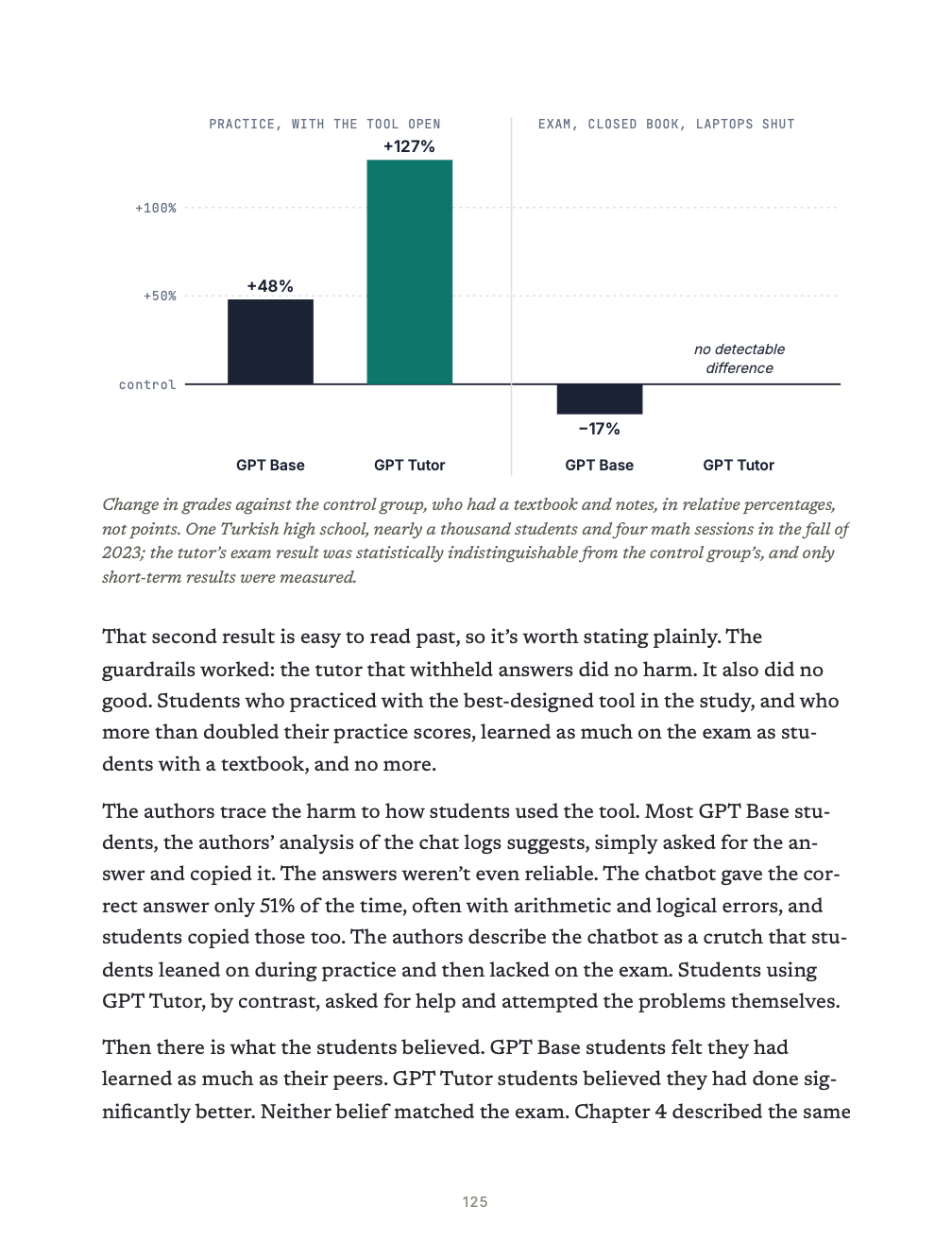
In a trial at a Turkish high school, students who practiced math with GPT-4 scored 48% higher on the practice problems, then 17% lower than their classmates on the exam.
Chapter 8Why the same tool can raise practice scores and weaken the skill, and what seems to make the difference.
- 03
“Every application looks polished. Who’s actually good?”
When anyone can produce a strong cover letter or take-home test, polish stops proving anything. The signals that replace it, like referrals and track records, favor people who already have a head start.
Chapter 7What still proves competence when answers are cheap, and who loses most.
“The words had become cheap. What made the words worth reading had not.”
The core of the book
Five questions to ask about your own work
Each pattern was found first in a field where answers got cheap early, and each comes with the conditions under which it fails. The Interlude sets them side by side, and the Field Guide turns them into a diagnostic.
- 1
Who gains?
The Rising Floor. AI supplies the skill that’s written down, so beginners’ work climbs toward experts’. Choosing the problem and judging the answer stay scarce.
- 2
Does the work grow or shrink?
The Flood. When something gets cheaper to make and demand can grow, far more of it gets made. A field can grow while particular jobs vanish.
- 3
What gets drained?
The Drain. Shared answers are built from original work. When enough people take the answer instead of doing the work, the work slows, and in time the answer weakens.
- 4
What will I lose?
The Forgetting. Automation takes the routine cases, skills fade without practice, and people are left with the rare, hard cases they’re least practiced for.
- 5
What still needs a person?
The Stake. Something proves its value only when someone puts something on the line: a license, a reputation, their time or their body.
What’s inside
From chess and the cockpit to your own work
Three parts. Part One finds five patterns in fields where answers got cheap early. Part Two watches them collide in careers, hiring, school, outsourcing, culture and prices. Part Three asks what happens if the machines don’t stop improving. Every chapter opens on a puzzle and ends with a question about your own work.
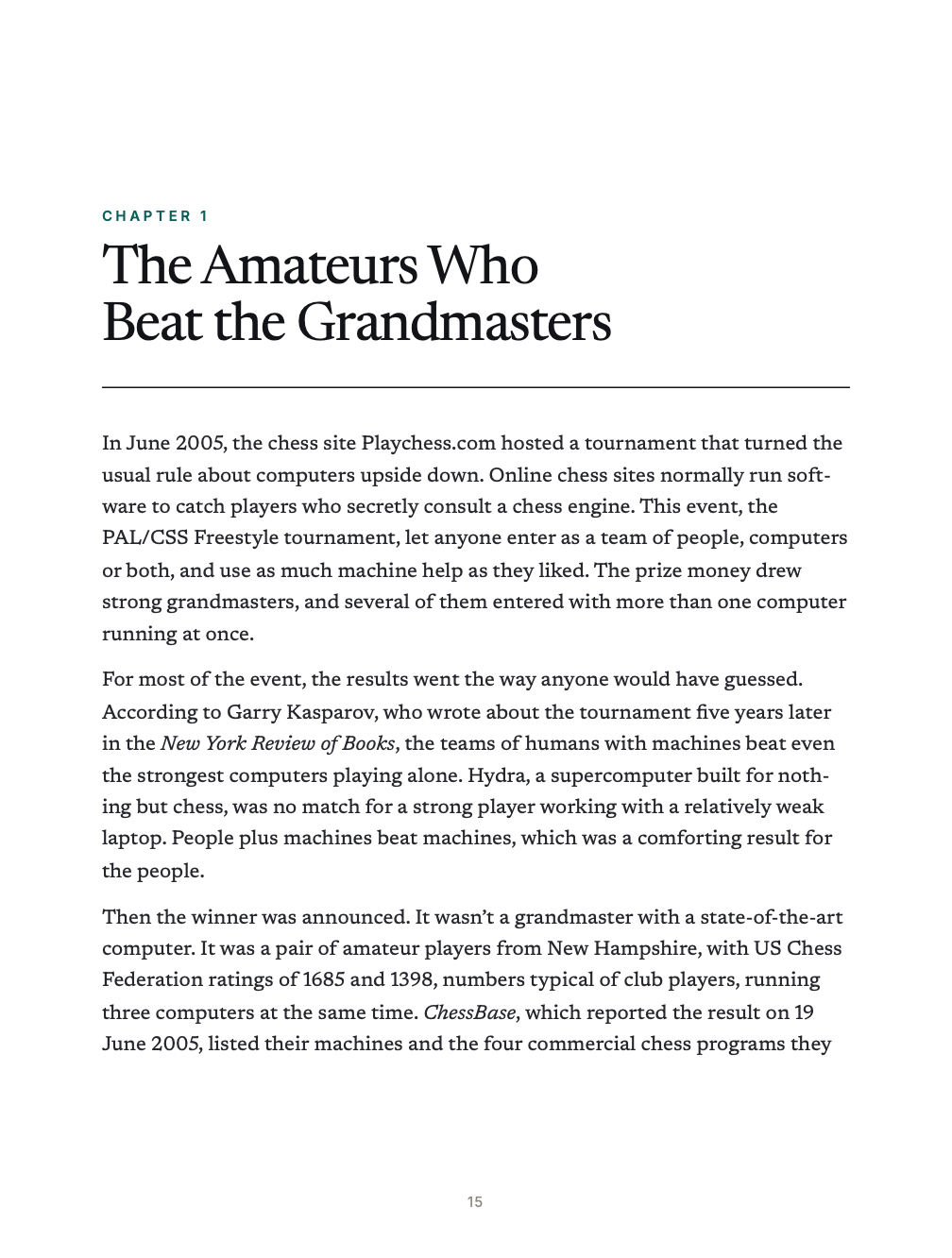
The stories come from published research, official reports and journalism: two chess amateurs who beat grandmasters in 2005, the human computers at Langley, Air France 447 as its investigators recorded it, an Ivy League class that averaged 96% on a take-home midterm and 48.6% on an in-person final, and an AI band with more than 900,000 monthly listeners. Private people are described by role, not by name.
Part One6 chaptersThe MechanismsFive patterns, each found first in a field where answers got cheap early: chess, computing, a programmers’ forum, the cockpit and radiology.
- 1The Amateurs Who Beat the Grandmasters
- 2The Job Called “Computer”
- 3The Site That Taught the Machines
- 4The Cockpit
- 5Stop Training Radiologists
- InterludeThe Five Questions
Part Two6 chaptersThe CollisionsThe patterns meet, two at a time, in careers, hiring, school, India’s outsourcing industry, culture and the wider economy.
- 6The Missing Rung
- 7The Collapse of Proof
- 8Homework After Answers
- 9The Arbitrage
- 10The Median Machine
- 11Baumol’s Revenge
Part Three1 chapterThe LimitsWhat happens to the patterns if the machines don’t stop improving.
- 12What If It Doesn’t Stop?
Also in the book
- Prologue: The Hard Parts
- Epilogue: Back to the Hard Parts
- Field Guide: Running the Five Questions
Look inside
A few pages from the book.
This book is for you if…
- You use AI at work and wonder whether your experience still counts
- You have school-age children and wonder what homework is for now
- You hire or manage people, and polished applications tell you less than they did
- You want evidence and stories, not hype in either direction
It’s probably not for you if…
- You want a how-to for an AI tool. The other three books here are practical guides
- You want a forecast of what AI will be able to do in five years
- You want career, investment, legal or medical advice. The book gives none
Free sample
Read it before you buy it.
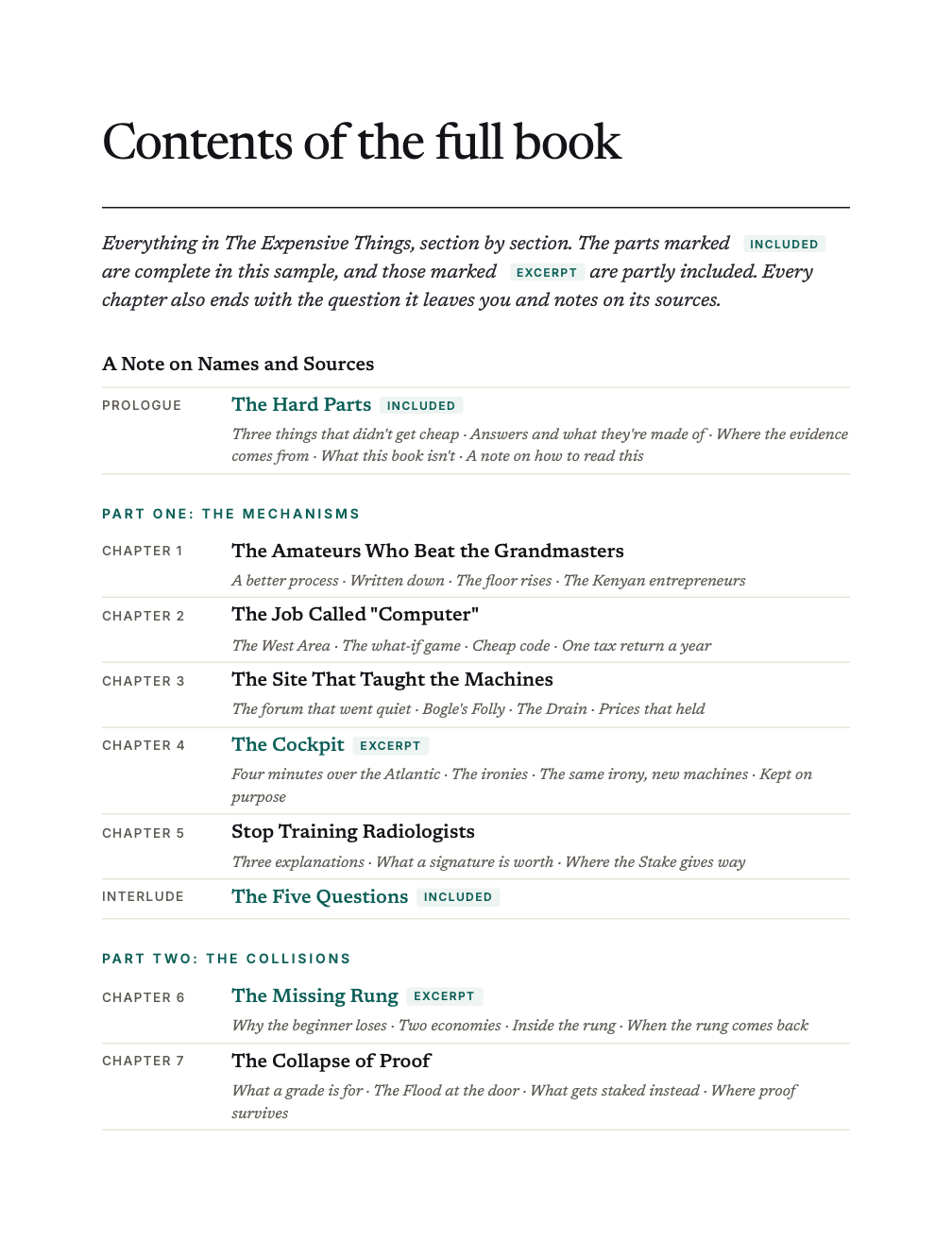
The full contents, section by section, plus these pages from inside the book:
- ProloguePrologue: The Hard Parts
- Chapter 4The Cockpit: Air France 447 and the ironies of automation
- InterludeInterlude: The Five Questions
- Chapter 6The Missing Rung: why the beginner loses
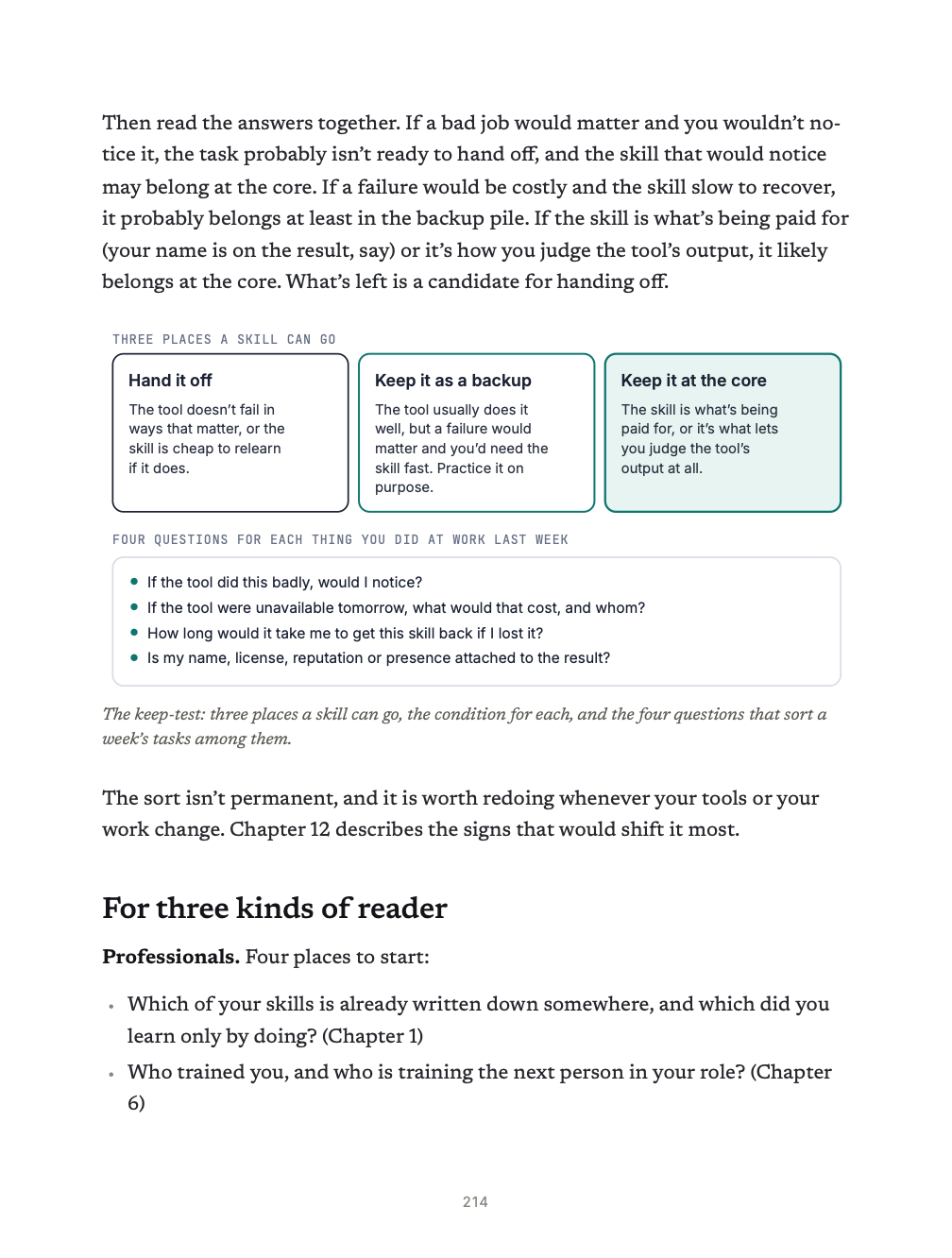
- Field GuideThe keep-test, from the Field Guide
A 30-page PDF. No email or sign-up needed, and you’re welcome to share it as long as it stays unchanged and free. See the privacy policy.
The complete book
The Expensive Things
What Stays Valuable When Answers Get Cheap
- The complete 221-page book as a PDF with clickable bookmarks, and as an EPUB for e-readers
- 12 chapters in three parts, with a prologue, an interlude and an epilogue
- The Field Guide: the five questions, the keep-test, notes for professionals, parents and managers who hire, and three worked examples
- Figures that show the evidence at a glance, from the Air France 447 timeline to the keep-test
- More than 300 source notes with links, at the end of each chapter
Checkout opens soon. In the meantime, the free sample is yours to read and share.
Read the free sample Building with AI as well as thinking about it? Get all four books togetherQuestions
Before you buy.
Is this a how-to book?
Is it about one AI product?
Who is it for?
Will it tell me what happens to my job?
How current are the figures?
Did AI write this book?
What do I get, and how is it delivered?
Can I pay in my own currency?
What if it isn’t for me?
Run the five questions on your own work.
221 pages · 12 chapters